Followers

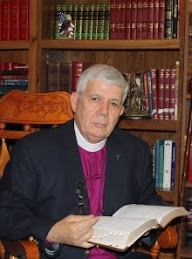
Presiding Bishop Jerry Ogles, D.D.

Presiding Bishop Jerry Ogles, D.D.
Anglican Orthodox Communion

Tuesday, May 29, 2012

Devotion for Whitsun Tuesday 29 May 2012 Anno Domini


13 Ye are the salt of the earth: but if the salt have lost his savour, wherewith shall it be salted? it is thenceforth good for nothing, but to be cast out, and to be trodden under foot of men. (Matt 5:13)
The Collect
Tuesday in Whitsun Week
G
RANT, we beseech thee, merciful God, that thy Church, being gathered together in unity by thy Holy Spirit, may manifest thy power among all peoples, to the glory of thy Name; through Jesus Christ our Lord, who liveth and reigneth with thee and the same Spirit, one God, world without end. Amen.
Pentecost (Whitsunday)
O
 GOD, who as at this time didst teach the hearts of thy faithful people, by sending to them the light of thy Holy Spirit; Grant us by the same Spirit to have a right judgment in all things, and evermore to rejoice in his holy comfort; through the merits of Christ Jesus our Saviour, who liveth and reigneth with thee, in the unity of the same Spirit, one God, world without end. Amen.
Over the past week, we have studied certain Old Testament parables selected for their beauty and meaning. We have not covered all of them for there are many; however, we have covered a small selection to remind us that the OT does present parables for our understanding. We will now turn to the New Testament Parables most of which I plan to cover in the coming year. Perhaps it might be helpful to review the meaning of `parable.' According to Webster's American Dictionary of the English Language (1828 ed), A parable is an allegorical representation of something real in life or nature, from which a moral is drawn for instruction; such as the parable of the trees choosing a king in Judges IX, etc. There are parables in the Bible which we might not realize are parables until we have considered the natural, as well as spiritual, meaning attending. Such a parable is being considered today in Christ's Words regarding `salt.' Though He is the Maker of salt and knows its composition and nature better than any other, He uses the compound to reveal a deeper spiritual truth that has a likeness to that physical nature of salt.
First, let us look at the Collect for Whitsun Week: We will immediately notice that the entire petition is directed to the glory of God with no personal request for material benefits. The key element of this Collect is our gathering for worship "in unity by the Holy Spirit." Have we thought this one through carefully? Why are there divisions in the church? It is simply because some individuals, or many, are not listening to the voice of the Holy Spirit. His Voice is single and not divided. If we are studying the Word under the Light of the Holy Spirit, how can we be divided? If we understand clearly the mandate of Holy Matrimony from Scripture, how can we be divided on marriage as existing solely between one man and one woman? When the church is Bible-centered, there will be no division, and the power of God among all of its people will be made manifest. When we pray the Collect, do not be guilty of `vain repetition.' Pray with conviction and understanding!
The single-verse parable we are studying today relates to a physical property of a physical compound calledSALT, or NaCL. Christ does not randomly choose His subjects, but He does so with a fuller knowledge of the nature of the matter than the collective minds of all of our greatest scientist combined. Salt is a very valuable compound not found everywhere in abundance. It is valuable because it is essential for life. The term `salt' derives from the Latin `salio' from which we get the term `salary.' Salt was so valuable during the Roman Empire that it was used as payment for soldiers.
Chemically, salt possesses some surprising characteristics in the combining elements of sodium and chlorine. There are a variety of benefits we may gather from simple table salt. It is a preservative of foods, and was applied between the boards of ships to preserve them from, decay. The Christian testimony of those living among a world of the lost also helps to preserve the better natures of society. It may be used to melt ice and, so, Christians, too, are those who break the ice when hateful speech may be uttered, or spiteful behavior demonstrated. Salt also creates thirst (i.e very salty popcorn in cinemas to encourage the further purchase of a soda). The life of a Christian should be such as to create a thirst (as the Woman at the Well) for the Water of Life. Salt also helps to speed the healing of wounds and sores. Christians, too, must be a healing balm in society. Salt brings out the flavor in foods. So should the Christian make the better way attractive to those around him?
Ye are the salt of the earth. There is no other salt of the earth but those whose faith unite them in Christ. Christ chooses His Words wittingly knowing every facet of the nature of salt. But if the salt have lost his savour, wherewith shall it be salted? How does salt lose its savor, pray tell? How does regular table salt, for instance, lose ITS savor? The two combining elements of salt compound are sodium, a silver, soft metal never found in its pure form in nature. Like the sinner, it is always joined to some other if not joined to God (Chlorine). Sinners are never pure in form until they have that imputed purity of Christ. When salt is placed in bags upon the earth, it will not be a very long while before the element of sodium (the sinner) begins to separate from the Chlorine (God) and takes on a union with one of the lesser elements of the earth. It is interesting to note that Sodium is poisonous for our consumption, yet it joins with another deadly poison – Chlorine – to form a compound essential for life. Chlorine is an odorless, invisible gas that is so deadly that it was the first chemical used in Chemical warfare during World War I. Without God (Chlorine), the sinner (Sodium) will always be deadly and joined to the world. Contrarily, if we are not joined to God (Chlorine), we are dead in trespasses and sins. An example is given by the Rev.Theodore L. Cuyler, LL.D.: "A merchant of Sidon, trying to escape paying a duty to the government, carried off an immense cargo of Cyprus salt and stored it up among the mountains in fifty or sixty stone cabins. There were no floors to the cabins, and the salt, by lying next to the ground, became utterly worthless. Bushels of it were shoveled into the road and `trodden under foot of men.' That Sidonian merchant's experience with his salt stored away next to the damp ground is full of warning to us. Grace is never given to us to be stored away; it will soon lose its pungency unless it is used, and leave us wretchedly insipid. Scatter your salt, brother, for `there is that scattereth and yet increaseth.' Jesus will give to thee all the more abundantly." It is thenceforth good for nothing, but to be cast out, and to be trodden under foot of men.
If we view table salt under a microscope, we will observe that it is comprised of perfectly cubed crystals, and it is white in appearance. We, too, must be four-square in our dealings with others, and we must be pure in Christ. If we crush a cube of salt, it will maintain its structural integrity by simply forming several smaller perfect cubes of salt. Do we maintain our Christian integrity even under pressure and persecution?
Salt must be applied modestly and evenly. As Christians we do not go out pronouncing judgment on every sinner we meet. We are kind and gentle in our approach just as was Christ. Actually, our life, more than our words, will draw the lost to inquire of the mystery. Did Christ ever tell a depraved sinner that he was bound for Hell? Though He was quite harsh with the Jewish rulers in telling them that they were of their father the devil, He never used such words with the woman taken in adultery, the woman at the well, or the poor lepers.
We might consider the Church to be likened to a salt shaker. Salt in kept in the shaker ready for use. Small holes are made in the top of the shaker so that we do not over-salt our meals. Those who are led to Christ must be led with simplicity as babes or lambs – not with an overly enthusiastic appeal to all of the counsel written in Holy Scripture. They must have the milk first, and then, as they grow stronger in faith, the meat. But what happens when the salt in the shaker goes unused for long periods of time. What happens when we get so buddy-buddy inside church with our social meetings and fellowships that we disregard those without? The salt forms lumps in the shaker and cannot be applied when needed. So we must be active in seeking those who need our salt and we must be ready to be used in its application.
Christ tells us that we must have the nature of salt in preserving, healing, making thirsty for the Water of Life, in improving the appeal of the Gospel through our living testimonies, and being used sparingly to the benefit of the Gospel. Remember, it is not the salt that is the essential, but the Bread of Life which it seasons. Have you been salt today?

Sunday, May 27, 2012

Sermon Whitsunday 27 May 2012 Anno Domini


19 The woman saith unto him, Sir, I perceive that thou art a prophet. 20 Our fathers worshipped in this mountain; and ye say, that in Jerusalem is the place where men ought to worship. 21 Jesus saith unto her, Woman, believe me, the hour cometh, when ye shall neither in this mountain, nor yet at Jerusalem, worship the Father. 22 Ye worship ye know not what: we know what we worship: for salvation is of the Jews. 23 But the hour cometh, and now is, when the true worshippers shall worship the Father in spirit and in truth: for the Father seeketh such to worship him. 24 God is a Spirit: and they that worship him must worship him in spirit and in truth. 25 The woman saith unto him, I know that Messias cometh, which is called Christ: when he is come, he will tell us all things. 26 Jesus saith unto her, I that speak unto thee am he.  (John 4:19-26)

Pentecost, commonly called Whitsunday.
The Collect.

O
 GOD, who as at this time didst teach the hearts of thy faithful people, by sending to them the light of thy Holy Spirit; Grant us by the same Spirit to have a right judgment in all things, and evermore to rejoice in his holy comfort; through the merits of Christ Jesus our Saviour, who liveth and reigneth with thee, in the unity of the same Spirit, one God, world without end.  Amen.

¶ This Collect is to be said daily throughout Whitsun Week.

     We have hitherto observed the Church Season from Advent to Whitsunday (today) of the present year. The entire church year is like the budding of a beautiful rose in revealing the completed works of Christ for us.

     In today's text, Jesus had begun his ministry on Jordan Banks at His baptism, performed His first Miracle at a Wedding Feast at Cana of Galilee, and then determines that "He must needs go through Samaria." This is more than a quaint phrase from Shakespearean English. Why did Jesus NEED to go through Samaria when this would have been a diversion to the normal course of travel to Galilee? Perhaps we might posit that question much earlier: why did Jesus find it necessary to come to Bethlehem as a babe, or to be baptized like unto us, or to do so many marvelous works and wonders among us, or to readily go to the cross and die in our stead? The answer, of course, is that He must satisfy the foreordained purpose and grace of God the Father in saving us…..and, as well, a poor and sinful woman at Jacob's Well, and at an insignificant city in Samaria. Christ must needs go through Samaria because He knew of a woman whose heart was pierced with many wounds that sin had caused in that heart. And He came not only for that particular woman, but all of the other men and women of Samaria who would be drawn to Him through the testimony of that woman whom no one would have believed prior to her coming to know Christ. Is this not marvelous to know - that He came, two thousand years ago, to a manger in Bethlehem to save multitudes of that land, but also you and me in particular!

     Christ had a rendezvous with an unsuspecting woman whom He had watched many times, through the eyes of the Holy Ghost, come to draw water at an inopportune time of noon to the Well. She thirsted for water, but she knew not that Water which would satisfy not only her thirst but her soul. She brings an empty bucket to be filled, but she also brings an empty heart that needed filling more.

     Our Lord Jesus Christ is foremost a gentleman. The Spanish say: "Jesus es el Senor" He will not impolitely impose upon our hearts without a proper opening.  The Lord insightfully engages the woman with a marvelous exchange of wisdom and insight into her character and present circumstance. Doesn't He engage us in the same manner? Have we ever gone through the usual exercise of the day when, suddenly, we meet someone, or have an experience, that is totally unplanned but which changes our whole day? The woman got out of bed as usual that day. She avoided the women of the city and their gossip by going to the Well at the unusual hour of greatest heat – Noon.  But there she met someone whom she considered to be a Stranger. Perhaps He had been to her, but she had been no stranger to Him for He knew of every secret of her heart. He knows the secrets of our hearts as well and nothing is hidden from His understanding.

     As the two discuss the matter of water, the poor woman's heart is focused on water that lies fifty feet or so beneath the surface in the bottom of a Well; but Christ makes reference to that Water which comes down from Heaven – the Water of Life which He freely offers. An empty heart can hold much of this Water once it opens to the Giver. Our hearts are also made to be receptacles of that Water of Life if we open them to the Giver.

     The woman claims not to have a husband, and Jesus confirms that she does not have, for the five she has had before are not her husbands, and the one with whom she lives now is not her husband. The woman is mystified by this Stranger whom she can not deceive. He knows too much of her to be one of those kinds of men she has known in her past.  That is one of the characteristics of Jesus – He mystifies us with His grace, His love, and His Wisdom towards us.

     The woman recognizes that none other than a great prophet could utter such words of understanding. Her sin-dimmed mind is beginning to receive a small and glowing light that leads to an even greater suspicion of who this Figure might be.  She says that Our fathers worshipped in this mountain; and ye say, that in Jerusalem is the place where men ought to worship. Now her mind is turned from earthly water to that which Christ offers. She is curious to know more.

     21 Jesus saith unto her, Woman, believe me, the hour cometh, when ye shall neither in this mountain, nor yet at Jerusalem, worship the Father. 22 Ye worship ye know not what: we know what we worship: for salvation is of the Jews. 23 But the hour cometh, and now is, when the true worshippers shall worship the Father in spirit and in truth: for the Father seeketh such to worship him. 24 God is a Spirit: and they that worship him must worship him in spirit and in truth. Has that hour yet come for the moslem-infested land of Samaria? Truly it has.  We, too, can know what and Whom we worship for Christ has taken upon His perfect Person the flesh of men such as we are. Being sinless, He suffered every pain and temptation that we are heir to. There is not longer any geographic limitation to the worship of God; however, we must worship in Spirit and, at the same time, in Truth. If we have great spirit, but depart from truth, we are not worshipping the True God. If we worship rigidly in Truth but lack the attendant Spirit of Love, we are amiss in our worship. Truth and Spirit combine to the glory of God in worship.

     So the lesson of today's Gospel text reminds us of the fullness of the ministry and Person of Christ. He came in the flesh to minister to us and to be Light unto our path. He died for us sealing the redemption promised to Abraham and his Seed. He was, in fact, that Promised Seed. He rose on the Third Day, according to the Scriptures, and then what? He ascended into Heaven where He sits on the right hand of God to be our constant Advocate and Intercessor. Having physically departed, Christ promised not to leave us comfortless (Greek meaning: orphaned). He must send the Spirit to be our Comforter and Guide in leading us into an understanding of all the truth of Christ revealed in Scripture. A Spirit is not limited in physical properties. The Holy Spirit has the nature to be in a billion hearts at once and leading all in the particular way the Spirit determines. Christ went away in bodily form and sent the Spirit to be a comfort to all of God's people regardless the distance and time that separates them from one another. This is the Glory of Pentecost and Whitsunday! Do you have that Water of Life poured out in your heart by that Holy Spirit of God in Christ today?

Saturday, May 26, 2012

Devotion for Saturday after Ascension Sunday 26 May 2012 Anno Domini

14 There was a little city, and few men within it; and there came a great king against it, and besieged it, and built great bulwarks against it: 15 Now there was found in it a poor wise man, and he by his wisdom delivered the city; yet no man remembered that same poor man. 16 Then said I, Wisdom is better than strength: nevertheless the poor man's wisdom is despised, and his words are not heard. 17 The words of wise men are heard in quiet more than the cry of him that ruleth among fools. 18 Wisdom is better than weapons of war: but one sinner destroyeth much good.  (Eccl 9:14-18)
The Sunday after Ascension Day.
The Collect.

O
 GOD, the King of glory, who hast exalted thine only Son Jesus Christ with great triumph unto thy kingdom in heaven; We beseech thee, leave us not comfortless; but send to us thine Holy Ghost to comfort us, and exalt us un-to the same place whither our Saviour Christ is gone before, who liveth and reigneth with thee and the same Holy Ghost, one God, world without end.  Amen.

     The Old Testament Parable today is found in verses 14 and 15 of the text above. The parable bears out a truth that is evidenced in all of the endeavors and experiences of civilized peoples – those who are wise and prudent are generally not highly regarded by those greater numbers among us who live for the present moment and who make no provision for future needs. The wisdom that comes from God is deposited in the hearts of those who seek and cherish wisdom. This was true of Solomon, and it is true of all who seek wisdom and are willing to obey its voice. Of course, the mere possession of wisdom will not avail – its voice must be heeded else we do not possess it. The gentler and more passive voice of wisdom is oft drowned out by men whose hearts are bent on making wealth on the backs of future generations, or by those beating the drums of war for the sake of conquest for speculation in arms and materiel of war. Only when the circumstance of a people or nation become hazardous will they sometime hear the voice of wisdom which speaks without greed or selfishness. The brilliance of a gifted writer is to put an abundance of meaning in concise letters, and God is the Author of greater brilliance than any other. The parable is brief, abounding  with meaning, and enlightening to all who will read for understanding.
     14 There was a little city, and few men within it; and there came a great king against it, and besieged it, and built great bulwarks against it: The city is small and therefore one in which any one of note would be well known to all inhabitants. It is a city that is not equipped to defend itself from so great an army as has come against it in the erecting of bulwarks against her walls. With no standing army, what shall the city do? It is the nature of life that the greater will always oppress the weaker. The Great King, Cyrus (the anointed of the Lord), was the first to take a benevolent approach to those people whom he had conquered. His policy is encoded on the walls of the Hall of the Nations and by the stairway of the Appadana at Percepolis, written in Mesopotamian Cunieform, which I was privileged to observe in 1975: "All these nations have I, Cyrus, conquered by the strength of Ahuramazda (God). I lifted the unbecoming yoke from off their necks and caused the stronger not to strike the weaker." But this sentiment is not the usual one demonstrated in the policy of nations. Wars are caused, almost without exception, by greed and lust. The victor, through rapine and pillage, oppresses and humiliates the nation or people who fall their victims. This city is nearly defenseless. They have fashioned no war engines, and know not the art of war. In such circumstances, the only element that can compensate for such lack is that rare element of wisdom. But in order to discover wisdom among a population not given to the study of it, a search must be made for the exceptional man among them who does know Wisdom and has attained it.  He will most likely not be well-known for he has been consulted seldom by a people whose bent has been to throw `caution to the wind' heedless of the counsel of God in wisdom.   
      15 Now there was found in it a poor wise man, and he by his wisdom delivered the city; yet no man remembered that same poor man. Desperation being the mother of invention, such a quiet and goodly soul was found in the city. It is perhaps likely that this wise soul offered many gems in times past from the Psalms and Proverbs to no result other than scoffing and ridicule. Perhaps he did so even as the enemy began to array his forces in resplendent and gleaming armor outside the walls, to the ignorance of the inhabitants of the town, until the threat became too much apparent and too late for  preparation for a viable defense.  They sought the advice and counsel of this wise, but poor, man. Wisdom holds no grudges and is ready to offer itself to all seekers.  If any of you lack wisdom, let him ask of God, that giveth to all men liberally, and upbraideth not; and it shall be given him. (James 1:5) I have personally observed that wisdom often resides more profoundly among poor farmers and miners sooner than among the elite in government, banking, or academia. Those who seek wisdom most often do so in the same manner as Solomon – without asking for wealth and riches to go along with it. Wisdom is sufficient in itself for our satisfaction and comfort. You will not find a source for it on NBC, CBS, ABC, or CNN – if you hear it being proclaimed, it will most likely come from less prominent voices. Once the threatened multitude have been rescued by the words of the wise man, they return to their thoughtless and complacent ways. The poor man is forgotten for his essential wisdom is not valued as much as present pleasures and filthy lucre. That disregard for wisdom is much as Rudyard Kipling spoke of God and the soldier: God and soldier, we adore, in time of danger, not before. The danger passed and all things righted, God is forgotten and the soldier slighted.     16 Then said I, Wisdom is better than strength: nevertheless the poor man's wisdom is despised, and his words are not heard. It is true that Wisdom is more precious than gold and silver, and it is a special benefit that comes from God. The world, however, despises wisdom and will silence it except in moments that the enemy is overrunning the walls and foxholes. The fleshly allurements of the world have a stronger draw on the ungodly soul than wisdom because wisdom smells of the halls of heaven – a prospect they cannot endure. Now the danger has passed, the wisdom of the poor man is no longer sought after.
     17 The words of wise men are heard in quiet more than the cry of him that ruleth among fools. Yes, wisdom speaks in low tones and never proudly proclaims itself from the parapets.  It is the Currency of the Realm and needs no other guarantee than its own Minting Authority. It speaks with the voice of God from the silent shadows of the mountain heights, and the stormy gales that threaten the beleaguered seafarer. The noisy multitudes at the foot of Sinai cannot hear Wisom's voice for their heart is not seasoned to hear it by study of the Word of God.
      18 Wisdom is better than weapons of war: but one sinner destroyeth much good.  Wisdom is even stronger than weapons of war because it is spoken by God. Moses and the Children of Israel saw Wisdoms power demonstrated as their hearts sank on the Red Sea Banks, but God had sent his Pillar of Fire by day and of Smoke by night to confuse, frustrate and destroy the mighty army of Pharaoh's gallants. Gideon saw that Wisdom destroy thousands at the hands of hundreds. Joshua saw Wisdom destroy the walls of Jericho by listening to that still, small voice that whispered to a heart that was receptive. But one sinner in the Garden brought ruin on all of his posterity. Have you, my friend, listened and heard the Voice of Wisdom in your own life?

Friday, May 25, 2012

AOC Friday Quote Digest


Courtesy of Rev Geordie Menzies-Grierson AOC UK

Quotes Of Interest ----Ministry Minute.
Commentary on Sunday's Gospel
Quotes Of Interest
--------------------------------
The Holy Spirit
821. Mr. Moody, taking in his hand a tumbler, explained that

It was full of air, and that it was almost impossible to remove

That air. In the same way the human heart is full of sin, and

Our efforts to remove it are unsuccessful. Seizing a pitcher of

Water from the table, he filled the tumbler so full of the liquid

That it overflowed to the platform. There was no longer any

Air left in the tumbler. His moral was that when a human

Heart is filled to overflowing with God's Spirit, there is no room

For sin in that heart.

Tyler E. Gale.
From BIBLE TRUTHS ILLUSTRATED
J. C. FERDINAND PITTMAN- 1917
--------------------------------------
In his sermon, "A Dangerous Pentecost," Halford Luccock tells of Lorenzo de’Medici, the great Florentine patron of the arts who was very proud of the spectacles he staged for the citizenry. Among his productions were several amazingly realistic religious pageants performed in church. But one Pentecost, Lorenzo went too far: he used actual fire to depict the descent of the tongues of flames on the apostles. The fragile stage set caught fire and, before horrified onlookers, the entire church burned to the ground (Marching Off the Map, Harper, 1952). The moral is clear: pray for Pentecostal power, but don’t try to manufacture it.
 
Charismatic Chaos, J. MacArthur, Jr., Zondervan, 1992, p. 175
-----------------------------------------
MINISTRY MINUTE
----------------------------------------------------
For private devotions.
Kindly Paraclete,
In Thy gracious visits to our souls
Thou bring relief and consolation.
Melt the frozen, warm the chill,
Bend the stubborn heart and will.
Heal our wounds, our strength renew,
On our dryness pour Thy dew.
Amen
(from the sequence for Pentecost Sunday)
Adapted Rev.GMG
----------------------------------------------------------------------
Commentary on Sunday's Gospel
Gospel Reading for Whit Sunday (Pentecost)
-----------------------------------------------------------------------------
.....we see in the first Christian Pentecost the joy and happiness of the Holy Ghost, the
Faith and love of the primitive Christians, in whom the spirit of Jesus Christ has been implanted by the Holy Ghost, in whom the peace of which the world knows nothing has be come a joyful reality, and love to God and love to their fellow-men is the
Controlling factor in their hearts, so that they live in peace, without contention and quarrel, with out envy and strife, without anger and hatred, then, then indeed we see a condition of affairs with which our own day and generation presents a lamentable contrast.
In the thou sands of contests and struggles that agitate the hearts of men and society everywhere there is one cry heard over all, and that is for peace. The Pentecost peace is found so rarely in our day ; and for that reason this festival is an admonition to earnest humiliation and prayer that the spirit of our times may be transformed and transfused by the Spirit of Pentecost from on high.
In the spiritual bitterness and darkness of to-day this is the only fountain of hope and reformation.
REV. DEKAN W. PRESSEL
From HOLY DAYS AND HOLIDAYS
Compiled byEDWARD M. DEEMS, A.M., PH.D. 1902
----------
Calvin on Pentecost
John Calvin, Theologian, 1564
 It was requisite that the gift should be visible, that the bodily sense might the more stir up the disciples. For such is our slothfulness to consider the gifts of God, that unless he awake all our senses, his power shall pass away unknown. This was, therefore, a preparation that they might the better know that the Spirit was now come which Christ had promised. Although it was not so much for their sake as for ours, even as in that the cloven and fiery tongues appeared, there was rather respect had of us, and of all the whole Church in that, than of them. For God was able to have furnished them with necessary ability to preach the gospel, although he should use no sign. They themselves might have known that it came to pass neither by chance, neither yet through their own industry, that they were so suddenly changed; but those signs which are here set down were about to be profitable for all ages; as we perceive at this day that they profit us.
 And we must briefly note the proportion of the signs. The violence of the wind did serve to make them afraid; for we are never rightly prepared to receive the grace of God, unless the confidence (and boldness) of the flesh be tamed. For as we have access unto him by faith, so humility and fear setteth open the gate, that he may come in unto us. He hath nothing to do with proud and careless men. It is a common thing for the Spirit to be signified by wind (or a blast). For both Christ himself, when he was about to give the Spirit to his apostles, did breathe upon them; and in Ezekiel’s vision there was a whirlwind and wind. Yea, the word Spirit itself is a translated word; for, because that hypostasis, or person of the Divine essence, which is called the Spirit, is of itself incomprehensible, the Scripture doth borrow the word of the wind or blast, because it is the power of God which God doth pour into all creatures as it were by breathing. The shape of tongues is restrained unto the present circumstance. For as the figure and shape of a dove which came down upon Christ had a signification agreeable to the office and nature of Christ, so God did now make choice of a sign which might be agreeable to the thing signified, namely, that it might show such effect and working of the Holy Ghost in the apostles as followed afterward.
 
From Commentary upon the Acts of the Apostles, volume 1,
by John Calvin, translated by Henry Beveridge; found at 
http://www.ccel.org/ccel/calvin/calcom36.ix.i.html

"It was King James I, I believe, who became annoyed with the irrelevant ramblings of his court preacher and shouted up to the pulpit: “Either make sense or come down out of that pulpit!” The preacher replied, “I will do neither.” - Steve Brown, in Tabletalk, August, 1990.

"Remember the days of old, consider the years of many generations: ask thy father, and he will shew thee; thy elders and they will tell thee." Deut. 32:7 –

"Enquire, I pray thee, of the former age." Job 8:8 –

"I have considered the days of old." Psalm 77:5 –

"This shall be written for the generation to come." Psalm 102:18 –

"Call to remembrance the former days." Hebrews 10:32 - "To put you always in remembrance of these things." - II Peter 1:12. [kjv]


Friday after Ascension Sunday 25 May 2012 Anno Domini


     1 And the word of the LORD came unto me, saying, 2 Son of man, put forth a riddle, and speak a parable unto the house of Israel; 3 And say, Thus saith the Lord GOD; A great eagle with great wings, longwinged, full of feathers, which had divers colours, came unto Lebanon, and took the highest branch of the cedar: 4 He cropped off the top of his young twigs, and carried it into a land of traffick; he set it in a city of merchants. 5 He took also of the seed of the land, and planted it in a fruitful field; he placed it by great waters, and set it as a willow tree. 6 And it grew, and became a spreading vine of low stature, whose branches turned toward him, and the roots thereof were under him: so it became a vine, and brought forth branches, and shot forth sprigs. 7 There was also another great eagle with great wings and many feathers: and, behold, this vine did bend her roots toward him, and shot forth her branches toward him, that he might water it by the furrows of her plantation. 8 It was planted in a good soil by great waters, that it might bring forth branches, and that it might bear fruit, that it might be a goodly vine. 9 Say thou, Thus saith the Lord GOD; Shall it prosper? shall he not pull up the roots thereof, and cut off the fruit thereof, that it wither? it shall wither in all the leaves of her spring, even without great power or many people to pluck it up by the roots thereof. 10 Yea, behold, being planted, shall it prosper? shall it not utterly wither, when the east wind toucheth it? it shall wither in the furrows where it grew. (Ezekiel 17:1-10)
The Sunday after Ascension Day.
The Collect.

O
 GOD, the King of glory, who hast exalted thine only Son Jesus Christ with great triumph unto thy kingdom in heaven; We beseech thee, leave us not comfortless; but send to us thine Holy Ghost to comfort us, and exalt us un-to the same place whither our Saviour Christ is gone before, who liveth and reigneth with thee and the same Holy Ghost, one God, world without end.  Amen.

     As we become more and more the devoted friend of the Lord, our diligent studies will reveal more easily His stated Will and Intent for our lives as we read from every remunerative corner of His Scriptures. There may have been a time when our reading of today's Old Testament parable would have been a nice story but one lacking in any obvious application to our lives today. But now that we have claimed Christ as our intimate Friend and Lord, we read such accounts with renewed conviction and understanding. Beautiful passages which were once believed with a casual notice now draw our hearts and minds closer still to the Heart and Mind of God as we read and study with greater understanding…..and Love. God presents us with a continuing allegory which requires more than an elementary regard for understanding. The manner in which muscles are built stronger and larger is through physical exercise. God uses the same principle to strengthen our hearts and understanding with soul-stretching exercises in His Word. A serious regard for the historical, as well as contemporary, conditions is important in gaining a deeper understanding of this parable.  God is not an obscurantist, but He does desire that we grow in scholarship and love of His Word by diligence in study of it. In our present case, He uses the Great Eagle as an illustration of truth. A rudimentary knowledge of the historical aspects surrounding the story will be helpful in getting its fuller meaning. The period of setting is during the sixth year of Zedekiah's reign and the seventh since Jehoiachin's exile to Babylon. It is the fifth year before the total destruction of Jerusalem. The fact that God makes reference to the parable as a `riddle' supports the notion that He desired its effects to provoke a deeper thought. Do we desire only to be spoon fed and bottle nourished with the milk of the Gospel, or do we desire to cast our buckets into deeper wells? Is it worth the effort? What do YOU think?
     1 And the word of the LORD came unto me, saying Whose word, once again, does the prophet quote – his own, or the Lord's? I grow weary of reading commentaries that quote what the prophet Isaiah, Jeremiah, Ezekiel, or Hosea has said when they should accredit their inspired writings to the account of the Lord. Ezekiel takes no credit for the Words he receives from the Lord, and tells us outright, their source. It is the Word of the LORD that comes to Ezekiel and of which he writes, not his own thoughts. And such is the nature of the entire Canon of Scripture.
     2 Son of man, put forth a riddle, and speak a parable unto the house of Israel. The dual-pronged nature of this story is that it is both a parable and also a riddle. It is directed to those who claim to be, in that day, the people of God who have been blessed, protected, chastised, and yet apostate once more. They have suffered invasions and exiles. Since they have rejected God's counsel for their lives and nation, God provides once last warning ere the flood gates of cruel desolation come upon them. The warning here is not only for the House of Israel, but for all peoples who have been richly blessed by God and then turn a blind eye and dumb ear to His Sovereignty and Counsel. Do you know of any contemporary people who have been so blessed and turned from God?
     3 And say, Thus saith the Lord GOD; A great eagle with great wings, longwinged, full of feathers, which had divers colours, came unto Lebanon, and took the highest branch of the cedar. This great Eagle represents the power and King of Babylon. His power was the greatest known on earth. The Eagle is the King of the Sky as well. The Eagle is `long-winged' because the scope of the Babylonian Empire was extensive. It was "full of feathers" depicts the post-molting stage of eagles in which they grow gloriously beautiful new feathers and appear as a young and fresh bird. These feathers relate to the many peoples and cultures that have been added to the province of the King of Babylon. The diversity of colors relate to the diversity of peoples and customs that had fallen subject to the Great King. The Eagle, as is the natural habitat of eagles, comes to the mountainous area of Lebanon that was home to the House of Israel. It might be observed that the Temple at Jerusalem was called `Lebanon' by the Jews since, according to the historian, Eusebius, all of its woodwork was from the Cedars of Lebanon. But to a greater extent, the reference is more generally to Jerusalem itself. And it shall come to pass in the last days, that the mountain of the LORD'S house shall be established in the top of the mountains, and shall be exalted above the hills; and all nations shall flow unto it. (Isaiah 2:2)  The great Eagle took the "highest branch of the cedar." This makes reference to King Jeconiah, eighteen years old, taken into exile. The tall and stately cedars of Lebanon are illustrative of the characteristic of kings. The highest branch is always the youngest and most tender (Jeconiah).
      4 He cropped off the top of his young twigs, and carried it into a land of traffick; he set it in a city of merchants. The constant invasions and dislocations of the people of Israel must be taken into account. Once a nation has known God, and then turned away in wickedness and apostasy, God removes His Hand of Protection and Mercy from that nation. The young King Jeconiah was carried by the Great Eagle into the land of traffic (commerce) which may be concluded by history and Scripture to be Babylon. He is kept there in the commerce center of the then known world.
     5 He took also of the seed of the land, and planted it in a fruitful field; he placed it by great waters, and set it as a willow tree. The Babylonian King was acting, unwittingly, according to the dictates of the greater Sovereign who is God. He "took the seed of the land" (one who was of the stock and lineage of Israel) and set him in a lush place by the rivers of water. This one was Zedekiah who had thus sworn allegiance to the King of Babylon. In this case, God had judged Israel and intend their exile in Babylon to be a chastisement for apostasy; and God intended Zedekiah to be faithful to his oath of allegiance under that chastisement.
     6 And it grew, and became a spreading vine of low stature, whose branches turned toward him, and the roots thereof were under him: so it became a vine, and brought forth branches, and shot forth sprigs. Instead of become an humble willow tree, or any tree at all of stately bearing, Israel became a vine of low stature but nonetheless one producing fruit under its chastisement. Israel owed her allegiance to Babylon and her branches turned toward him in obeisance. As her "roots were under him (King of Babylon) she received her nourishment and protection from him – the mightiest power known. When God rebukes us for our national and personal sins, we must be faithful even under that chastisement. God would expect Zedekiah to have shown gratitude for the mercies of the King of Babylon rather than revolting from that power.
     7 There was also another great eagle with great wings and many feathers: and, behold, this vine did bend her roots toward him, and shot forth her branches toward him, that he might water it by the furrows of her plantation. Zedekiah had not only disregarded the counsel of God given by the prophets, including Jeremiah, but also was disloyal to his beneficent protector, King Nebuchadnezzar. He played traitor by conspiring with the King of Egypt (the other great Eagle who did not have long wings because it lacked lacked empire). The armies of Babylon eventually would conquer Pharaoh Necho's army at Carchemish and Zedekiah would be forced to capitulate, having his eyes put out, after seeing each of his family murdered before them, and carried away captive to Bablyon. The bountiful waters of the Nile feed the fertile fields of that land by means of furrows and canals (in addition to seasonal flooding).
     8 It was planted in a good soil by great waters, that it might bring forth branches, and that it might bear fruit, that it might be a goodly vine. If we cannot be a stately Cedar of Lebanon before the Lord, then we can be at least a fruitful vine. We must be satisfied with the soil in which we are planted for a seedling cannot remove and replant itself. Wherever the Gardener places us, there we must produce fruit. Under Babylon's rule, Israel was nourished and cared for, but pride governed the heart of Zedekiah and he rebelled against the provision made by God in Babylon's rule.
     9 Say thou, Thus saith the Lord GOD; Shall it prosper? shall he not pull up the roots thereof, and cut off the fruit thereof, that it wither? it shall wither in all the leaves of her spring, even without great power or many people to pluck it up by the roots thereof. The first great Eagle will not be pleased at the duplicity of Zedekiah, and neither will our Lord be pleased by ours. We cannot serve God and Mammon. Shall the American people, who have become a low-clinging vine, not be pulled up by the roots for her duplicity in turning from God, her Benefactor, and clinging to a strange ideology that includes outright and abominable sins against God's Holy Will and Creation? God will use the King of Babylon to execute further judgment against Israel. God has allowed is in America to wallow in the muds and filth of opulence. He has reminded us of our former grandeur in Christ, yet we have gone even deeper in our decadent and depraved hearts. We have turned God's plan and commandment given in Eden upside down and allowed vile and abominable marriages of homosexuals to be given the credibility of marriage – God's first institution in Eden. Instead of `replenishing' the earth with the gift of birth of new souls, we have murdered them in their mother's wombs as a choice and not an imperative. How much longer do you believe God will spare us a greater judgment than that which we are already beginning to feel?
     10 Yea, behold, being planted, shall it prosper? shall it not utterly wither, when the east wind toucheth it? it shall wither in the furrows where it grew.  Perhaps you are wondering, as babies on their mother's barren breast, "where is the love of God in this? First of all, I hasten to say that God's love is demonstrated in all of His judgments. The father that loves does not either spare the rod. If we are immature infants in Christ, we long for milk and candy; but God, because He loves us, will not allow us to have our head in such serious matters. There is a time for milk and candy, but the present predicament of America demands the meat and spinach of more stable diet. If I wanted better acclaim from the readers of these devotions, I would write always soft and comforting words, words that avoid the mere mention of sin, words that give a false sense of security but whose end will destroy. God has given us minds to see the results of our foolish ways. I can see, based on my small knowledge of God's Word, a terrible judgment which lays ahead for this beloved land of my fathers. How can I not reveal what God has promised for those who turn against Him after enjoying his blessings? That which happened to Israel in the dispersion fades in contrast to what awaits a nation who is singular in the abundance of blessings it has received from the very Hand of God. This Memorial Day, remember that our national freedoms were bought and paid by the blood of courageous men of war. But the freedom and liberty we have enjoyed in the shed blood of Christ has bought and eternal estate for us if we only repent and follow that Ensign of our Souls in the right path and according to that Ancient Landmark laid in Christ by the Father.

Thursday, May 24, 2012

Devotion for Thursday after Ascension Sunday 24 May 2012 Anno Domini


1 The word which came to Jeremiah from the LORD, saying, 2 Arise, and go down to the potter's house, and there I will cause thee to hear my words. 3 Then I went down to the potter's house, and, behold, he wrought a work on the wheels. 4 And the vessel that he made of clay was marred in the hand of the potter: so he made it again another vessel, as seemed good to the potter to make it. 5 Then the word of the LORD came to me, saying, 6 O house of Israel, cannot I do with you as this potter? saith the LORD. Behold, as the clay is in the potter's hand, so are ye in mine hand, O house of Israel. 7 At what instant I shall speak concerning a nation, and concerning a kingdom, to pluck up, and to pull down, and to destroy it; 8 If that nation, against whom I have pronounced, turn from their evil, I will repent of the evil that I thought to do unto them. 9 And at what instant I shall speak concerning a nation, and concerning a kingdom, to build and to plant it; 10 If it do evil in my sight, that it obey not my voice, then I will repent of the good, wherewith I said I would benefit them  (Jer 18:1-10)

The Sunday after Ascension Day.
The Collect.

O
 GOD, the King of glory, who hast exalted thine only Son Jesus Christ with great triumph unto thy kingdom in heaven; We beseech thee, leave us not comfortless; but send to us thine Holy Ghost to comfort us, and exalt us un-to the same place whither our Saviour Christ is gone before, who liveth and reigneth with thee and the same Holy Ghost, one God, world without end.  Amen.

The Collect for The Ascension Day.
The Collect.

G
RANT, we beseech thee, Almighty God, that like as we do believe thy only-begotten Son our Lord Jesus Christ to have ascended into the heavens; so we may also in heart and mind thither ascend, and with him continually dwell, who liveth and reigneth with thee and the Holy Ghost, one God, world without end.  Amen.

¶ This Collect is to be said daily throughout the Octave.

     If man could learn one profound fact about God and His nature, he might find it far easier to follow His every counsel. GOD is the utmost SOVEREIGN. Nothing happens in Heaven or Earth that God does not have the power to either perform or forbid. We build our castles of sand with great care, but then comes the tide at God's command and washes all into oblivion. Our labors die as the fires on distant dunes and are covered with the sands of time as that vain statue, Ozymandias (Shelley): I met a traveller from an antique land Who said: "Two vast and trunkless legs of stone Stand in the desert. Near them on the sand, Half sunk, a shattered visage lies, whose frown And wrinkled lip and sneer of cold command Tell that its sculptor well those passions read Which yet survive, stamped on these lifeless things, The hand that mocked them and the heart that fed. And on the pedestal these words appear: `My name is Ozymandias, King of Kings: Look on my works, ye mighty, and despair!' Nothing beside remains. Round the decay Of that colossal wreck, boundless and bare, The lone and level sands stretch far away". Our very names, a household treasure among friends and family, shall be as obscure as those works of the trifling `king of kings' Ozymandias, in two hundred years or less after our demise. We are merely the clay of the land that has produced us much like the corn of the fertile prairies and plains of America. Only that which we have deposited in the Bank of our Sovereign shall persist in value beyond our mortal days of fashioning by the Potter's Hands. If we stiffen our necks and hearts, He will simply mar the vessel and start anew to make another of better quality. Though the clay itself may be the same, the spirit shall be different, and it is the spirit of the soul that is its essence.

     1 The word which came to Jeremiah from the LORD, saying How can we say that our Bible is the Word of God when written by the scribe's finger? Because it is the Voice of the Lord which uttered the Word, and the Hand of the Lord that moves the finger that writes. In this verse, we see that it is the Word of the Lord which came to Jeremiah – a great and good prophet of the Lord.

     2 Arise, and go down to the potter's house, and there I will cause thee to hear my words. Just as our Anglican churches are provisioned with candles above the Lord's Table, a Cross thereon, and fine linen that hails back to the days of the Temple, the Lord uses the concrete and material world to teach us His spiritual truths at times. In the instant related above, it is the Potter and His Clay. As pointed out earlier, the Lord is the consummate teacher. We have observed that He teaches from the KNOWN to the UNKNOWN. It is not possible for learning to occur from the UNKNOWN to the UNKNOWN. But in the present occasion, He adds a learning asset that is also effective in teaching – not only by hearing, but by sight and example. The Potter's House is the visible expression, and the clay in His Hands is the example.

     3 Then I went down to the potter's house, and, behold, he wrought a work on the wheels. The Potter's Wheel is used to balance and devise symmetrically exact and cylindrically balanced creations from the clay. It is also used to trim excess clay from the Potter's Creation. God uses the dynamic of life to fashion us, His creations of clay, into comely and useful vessels. Without that balance of reverence, love, hope and character, we are not at all beautiful, but ugly and warped images of a creation that God intended for good.

     4 And the vessel that he made of clay was marred in the hand of the potter: so he made it again another vessel, as seemed good to the potter to make it. I would like to point out an amazing probability: the clay from which your body is made has been the very same clay of many other bodies over the centuries and millennia. We know, scientifically speaking, that our bodies are composed of the dust of the earth. We know as well that, when we die, our bodies return to that dust of the earth. It is not our clay bodies that define us, but our souls and spirits. God will have His desired vessel whether we are willing to be so fashioned our not.

       5 Then the word of the LORD came to me, saying, 6 O house of Israel, cannot I do with you as this potter? saith the LORD. Behold, as the clay is in the potter's hand, so are ye in mine hand, O house of Israel. Shakespeare well said that a "Rose by any other name would smell as sweet." Shakespeare was right (as if he needs my acclamation!) We are all, fundamentally, in God's Hands. We may sin woefully and finally reject God, but He is not deterred. He squeezes us in His Hand until we are no more and begins to make another vessel of better consistency and appearance – but the result will not be the same vessel we were when we were rejected by the Potter. The vessel itself will have altogether better properties and characteristics. The tribes that comprised God's people of old have failed God. They have enjoyed His sweet blessings, but rejected His righteous rule. He will mar that old Israel in the Palm of His Hand and will make a new Israel bringing for the fruits of the Kingdom. Remember the encounter Jesus had in the Temple with the Jewish rulers? Did ye never read in the scriptures, The stone which the builders rejected, the same is become the head of the corner: this is the Lord's doing, and it is marvellous in our eyes? Therefore say I unto you, The kingdom of God shall be taken from you, and given to a nation bringing forth the fruits thereof. And whosoever shall fall on this stone shall be broken: but on whomsoever it shall fall, it will grind him to powder (Matt 21:42-44) The people of God are not defined by national boundaries or racial composition, but by the condition of their hearts toward God. If old Israel fails, God will make them over so that new Israel of the Promise shall surely be His people.

     7 At what instant I shall speak concerning a nation, and concerning a kingdom, to pluck up, and to pull down, and to destroy it. That old proverb, "Where there is life, there is hope" finds its authenticity in God. It is never too late for a living soul to return to God and be granted grace and forgiveness. God forgives nations that repent their sin, and God forgives persons.

     8 If that nation, against whom I have pronounced, turn from their evil, I will repent of the evil that I thought to do unto them. God will DEFINITELY bring judgment on that nation that rejects Him and pursues sin. The moment we depart from the Throne of Grace, our judgment is slowly forming in Heaven. But it is always possible, spiritually, for a nation to repent its wickedness and be restored to favor with God. I hope that it is not too late for America. I know that God will forgive us yet if we only turn back to Him and seek His Face. If my people, which are called by my name, shall humble themselves, and pray, and seek my face, and turn from their wicked ways; then will I hear from heaven, and will forgive their sin, and will heal their land. (2 Chron 7:14) I am nearly embarrassed to mention this last verse from 2nd Chronicles since it has been mentioned as a cure for our sinful apostasy so often. But the fact that it is often mentioned lends evidence to the veracity of need to comply with it. It is God's WORD! My fear is that America's hearing will fail ere the Voice of God stops calling. We have sunken deep in decadence and depravity, and we rather enjoy our filthy rags and diet of roots and shrubs. The longer we remain in this deplorable state of unrighteousness, the less likely the probability that we can amend and turn to God.

      9 And at what instant I shall speak concerning a nation, and concerning a kingdom, to build and to plant it; We cannot patch our weathered main sail and again weigh anchor in the gale-force winds of sin. If we repent and God forgives, His judgment is abated for the time. But if we fall again into desperate sin, what shall God do?

     10 If it do evil in my sight, that it obey not my voice, then I will repent of the good, wherewith I said I would benefit them  God rules in the affairs of nations and of men. God has spoken Words of Life in all of His Word. Have we heard, and if we have heard, have we obeyed. In our early foundation as a nation, among the nations of the earth, America knew and remembered her Maker. She was a virtuous people, modest and reverent. Today, we are the purveyors of pornography to the world, the leader in the culture of abortion, the very proponent of wicked perversions involving men marrying men, and women marrying women. We lead the world in the numbers of single parent households, and trail in scholarship and education. Our face should burn with shame before the nations of the world who may recall our former grandeur and excellence. God placed our vessel of clay on a high pedestal, but we have not been pleased with such honors. We have preferred to return to the slop of the swine of the old country, and wallowing in the mud with the pigs of perversion, to that of serving God and preaching His Word with our hearts and actions. We who love God and adhere to His every Word are blessed to know Him. We remain a tiny remnant among the whole cloth of the Garment (world).

Shall we extend our scope and the size of this remnant, or shall we continue to shrink in size until we are covered with the sands of Ozymandias?